The Scope of the Challenge
Renewable energy infrastructure carries a biodiversity footprint that is often underestimated relative to its climate benefits. While there are notable renewables projects and initiatives which aim to support biodiversity, wind, solar and hydro developments all involve potential significant physical intervention in landscapes, habitat clearance, land use change, freshwater modification, and the introduction of infrastructure into ecosystems that may support threatened species or form part of ecologically important corridors.
This is not to suggest that the environmental case for renewable energy is undermined by these impacts. The relationship between climate change and biodiversity loss is well established, and the long-term case for decarbonisation remains clear. However, the sector's biodiversity risks are real, and the frameworks now governing nature-related disclosure, including TNFD, CSRD and GRI 101, require them to be systematically assessed rather than managed on a project-by-project basis.
Three specific risk areas are worth examining in detail, as they represent the most common gaps in current screening practice.
1. Key Biodiversity Areas and the Limits of Planning-Based Screening
The most visible layer of biodiversity risk for any land-use project is proximity to legally protected areas, national parks, nature reserves, Sites of Special Scientific Interest and their national equivalents. These carry regulatory weight and are typically well-captured in planning constraints.
Key Biodiversity Areas (KBAs) represent a second, internationally recognised layer of sensitivity that does not always have equivalent legal status at the national level. KBAs are defined as sites contributing significantly to the global persistence of biodiversity, identified through a standardised methodology developed by the KBA Partnership (of which IUCN and BirdLife International are members). Over 16,000 have been identified globally, including Alliance for Zero Extinction (AZE) sites holding the last remaining populations of one or more Endangered or Critically Endangered species.
Many KBAs are not formally protected under national law. A planning constraint search may not flag them. But under TNFD's LEAP methodology and ESRS E4, proximity to a KBA is a material factor in biodiversity disclosure. A renewable energy project that passed its EIA without objection may still require disclosure-level assessment if it sits within or near a KBA.
The practical implication is that screening against the World Database of Key Biodiversity Areas (WDKBA) should be a standard step in early-stage site assessment, both to adhere to the mitigation hierarchy, inform site selection and to build the evidential record for subsequent disclosure.
2. Freshwater Connectivity and the Limits of Footprint-Based Assessment
Freshwater ecosystems support a disproportionately high share of the world's threatened species. Fish and amphibians associated with rivers, wetlands and catchment systems are among the species groups most consistently identified as being at risk from extractive and infrastructure development activity.
For hydro and run-of-river projects, the critical challenge is that biodiversity risk is not bound by the physical project footprint. Changes to flow regime, sediment transport and water temperature propagate through the connected catchment, meaning threatened freshwater species may be exposed to impact at distances well beyond the site boundary. Standard EIA methodologies, which typically define impact spatially by buffer distance, do not always capture this hydrological connectivity.
3. Portfolio-Level Cumulative Impact
A single wind farm or solar facility has a defined direct impact. A portfolio of multiple installations spread across a region may contribute to cumulative impacts that are harder to detect at the individual project level: habitat fragmentation, disruption of ecological corridors, and the incremental reduction of landscape-level ecosystem integrity.
Cumulative impact assessment is one of the more technically demanding aspects of biodiversity management, specifically because the impacts in question emerge from the interaction of multiple projects, sometimes operated by different companies, across time and space. TNFD's LEAP framework and the IFC Performance Standards both acknowledge the need to consider cumulative effects, but doing so requires a systematic approach that goes beyond just site-level considerations.
Integrating These Considerations into Practice
KBA proximity, freshwater connectivity, and cumulative portfolio impact are common risk factors, not unusual exceptions. They are predictable features of renewable energy development at scale, and they are the areas where current screening practice most commonly generates gaps relative to what TNFD and CSRD require.
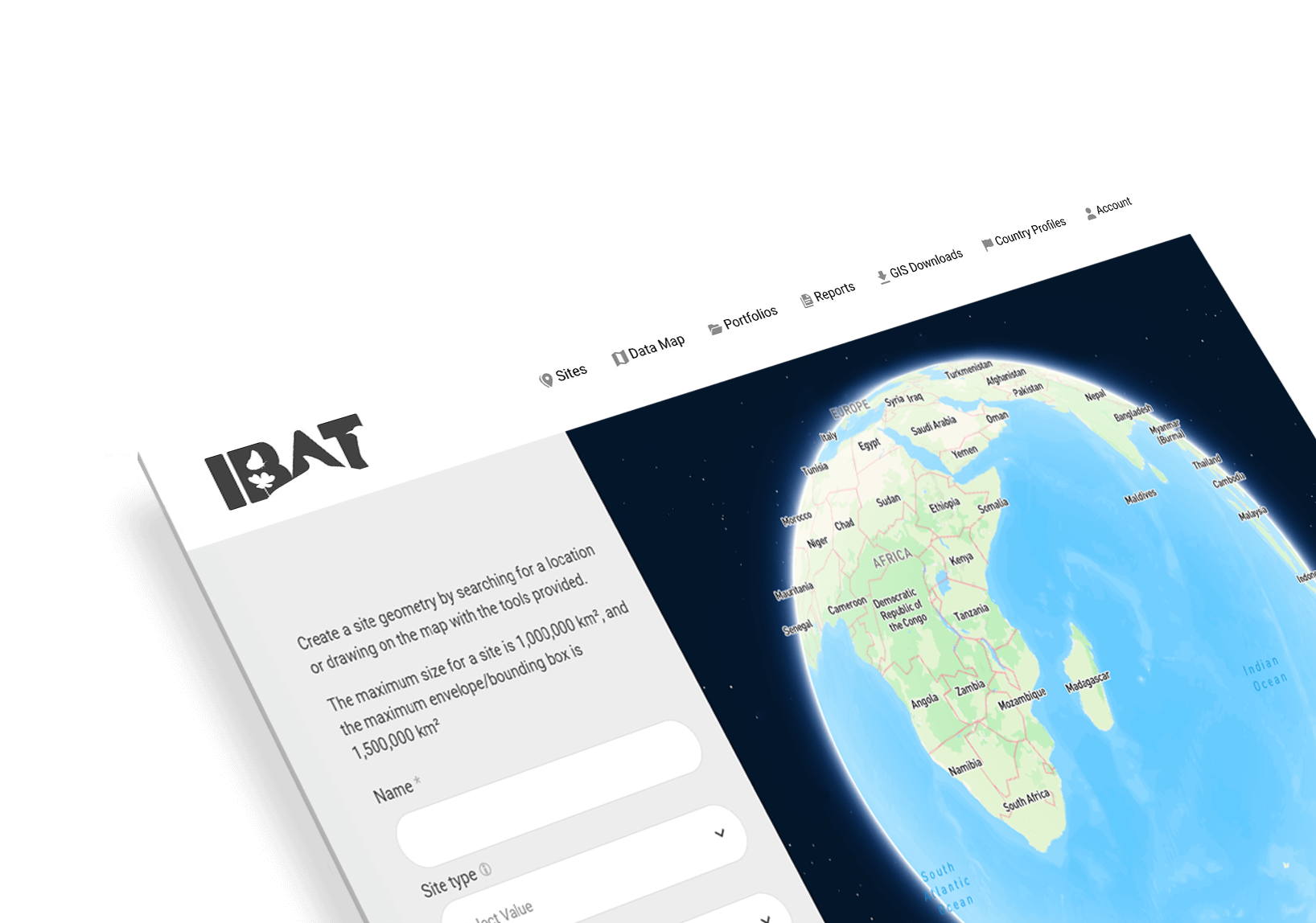
Addressing them requires access to biodiversity data that is globally recognised, regularly updated and applicable at both site and portfolio level. The WDPCA, WDKBA and IUCN Red List datasets, consolidated within IBAT, provide the foundation for this kind of systematic assessment.
To chat with our team about how we can help you, contact us using this link.