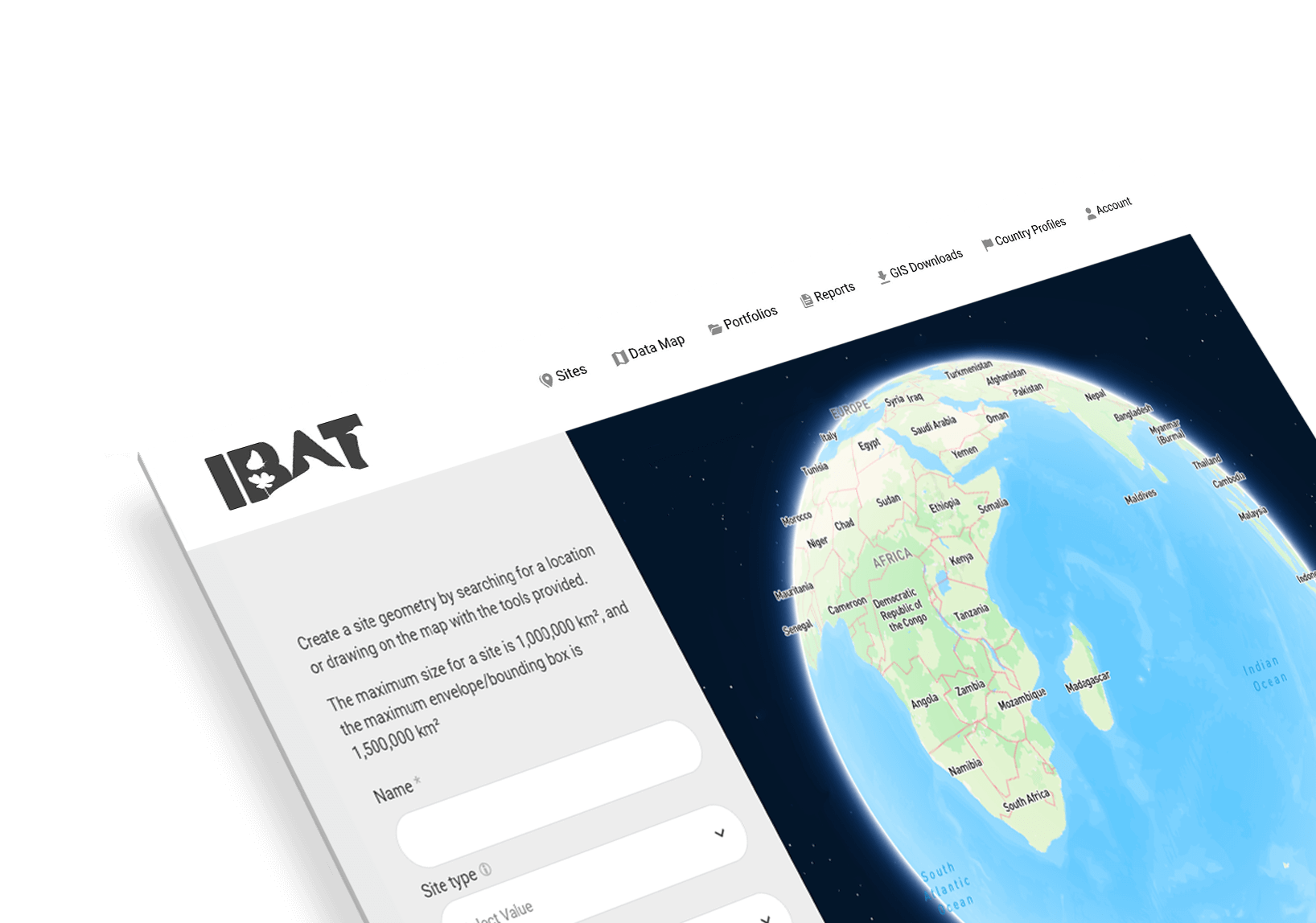
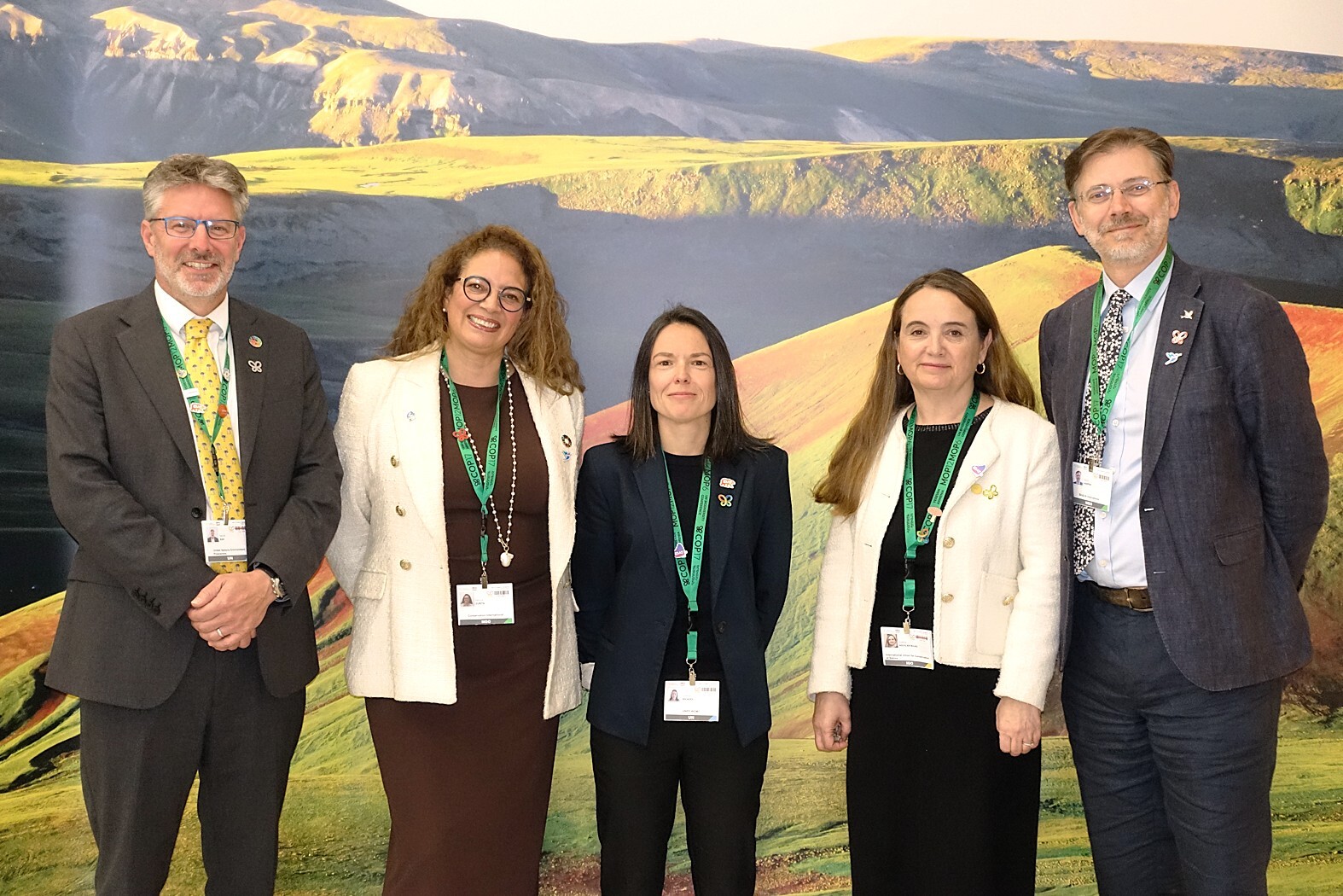
Yerevan, 27 October 2026: The Integrated Biodiversity Assessment Tool (IBAT) founders and partners – BirdLife International, Conservation International, International Union for Conservation of Nature (IUCN) and the United Nations Environment Programme World Conservation Monitoring Centre (UNEP-WCMC) - have today reconfirmed their formal collaboration focused on sharing critical biodiversity data and insights, designed to help businesses and financial institutions take action for nature.
Known as the IBAT Alliance, the four leading conservation organisations have worked together since 2008 to support a range of organisations, including companies and financial institutions, with decision-useful biodiversity insights and access to world-leading data including through the World Database on Protected and Conserved Areas (WDPCA), the IUCN Red List of Threatened Species™, and the World Database of Key Biodiversity Areas (WDKBA). This has enabled organisations to better understand and mitigate risk, align actions with global frameworks, and support nature-positive goals. IBAT will soon add the IUCN Global Ecosystem Typology and UNEP-WCMC's Ecosystem Integrity Index, extending its coverage from species and sites to whole ecosystems.
Revenue generated through IBAT is reinvested in the underlying data. In 2025, US$2.5m supported updates to WDPCA data for 88 countries and territories, helped expand IUCN Red List coverage from 166,061 to 172,620 assessed species, and funded work in Cameroon and Kenya expected to add or revise more than 100 Key Biodiversity Areas.
Cristina Secades, Biodiversity and Business Lead at the IBAT Alliance, said:
"The value of biodiversity data lies in the decisions and action it enables. As governments review progress on the Global Biodiversity Framework at COP17, demand from businesses and financial institutions for authoritative biodiversity data continues to grow, even amid geopolitical and market headwinds. Because IBAT's revenue is reinvested in the datasets themselves, the organisations using it are helping to keep that evidence current and credible for everyone who relies on it."
Martin Harper, CEO, BirdLife International, said:
“Authoritative biodiversity data are more important than ever to inform effective action for nature. Through the IBAT Alliance partnership we are providing access to world-leading biodiversity datasets such as the World Database of Key Biodiversity Areas which underpins global commitments to protect 30 per cent of land, freshwater and sea by 2030. Through this service, IBAT helps businesses and financial institutions understand their impacts and contribute to a nature positive future.”
IUCN Director General Dr Grethel Aguilar, said:
“Protecting species and sensitive areas demands urgent, sustained action grounded in rigorous science and collaboration. The IUCN Red List of Threatened Species, often called the barometer of life, assesses the extinction risk facing animals, fungi and plants worldwide. The renewal of the IBAT Alliance means this knowledge will continue to guide public and private sector decisions that protect biodiversity.”
Patricia Zurita, Conservation International Executive Director and Chief External Affairs Officer, said:
“Impactful action requires informed data. Businesses and financial institutions from around the world have already tested and used IBAT to guide their decision making. The scientific rigour that is the foundation of IBAT datasets and their analyses is what makes IBAT a critical partner to the private sector in securing a more sustainable future for all. We are proud to continue our collaboration to bring this knowledge to organisations and companies seeking to protect and conserve the most important habitats and ecosystems.”
Neville Ash, Director, UNEP-WCMC, said:
“We gather at CBD COP17 to accelerate urgent action to halt and reverse biodiversity loss. But we do so at a time of ongoing declines in nature around the world. Through access to data such as that in the World Database on Protected and Conserved Areas available through IBAT, businesses and financial institutions can draw on critical information and insights to understand and mitigate their impacts on nature and be at the forefront of positive action for business, people and planet.”
NOTES TO EDITORS
In 2025, investments into the WDPCA, the IUCN Red List of Threatened Species™, and the WDKBA have supported several developments, including:
· The WDPCA, created by combining the World Database on Protected Areas (WDPA) and the World Database on Other Effective Area based Conservation Measures, was updated for 88 countries and territories in 2025. By the end of 2025, the WDPCA available through IBAT contained 308,013 protected areas and 7,285 OECMs. This breadth and quality of coverage ensures the WDPCA remains the world's most authoritative global database on protected areas and OECMs — accurately tracking progress towards Target 3 of the Kunming-Montreal Global Biodiversity Framework and informing nature-related decision-making worldwide.
· 2025 marked another significant year for IUCN Red List of Threatened Species™, with support from IBAT helping to significantly expand taxonomic coverage, update existing assessments and enhance the systems underpinning the Red List. These assessments are widely used to inform biodiversity decision-making across governments, businesses and conservation organisations, including tracking progress towards the Kunming-Montreal Global Biodiversity Framework and supporting nature-related assessments and reporting. Two global Red List updates were published during 2025, increasing the total number of species assessed from 166,061 to 172,620 and the number of threatened species from 46,337 to 48,646.
· IBAT's investment in the KBA Programme was significant in 2025, providing funding that not only supported the management of the WDKBA but also was able to support the work of KBA National Coordination Groups in Cameroon and Kenya to update their KBA networks. The sites resulting from this support are currently being proposed in the WDKBA and will result in more than 100 sites being added or revised. Across all countries a total of 258 sites have been added, revised or delisted in 2026 to date with a further 658 sites in draft status or under review.
About the IBAT Alliance
The IBAT Alliance is a collaboration between four of the world’s most influential conservation organisations: BirdLife International, Conservation International, International Union of Conservation of Nature (IUCN), and the United Nations Environment Programme World Conservation Monitoring Centre (UNEP-WCMC). Founded in 2008, the Alliance developed IBAT which provides commercial access to the most globally authoritative biodiversity datasets – the IUCN Red List of Threatened Species™, the World Database on Protected and Conserved Areas (WDPCA) and the World Database of Key Biodiversity Areas (WDKBA) and derived datasets such as Species Threat Abatement and Restoration (STAR) – to support positive action for nature through the IBAT platform, a web-based mapping and early-risk screening tool. Italso supports organisations with related disclosures.
For further information or to arrange an interview please contact us at ibat@ibat-alliance.org.