By Martin Sneary, Director of Business and Nature, IUCN
As we approach the Convention on Biological Diversity 17th Conference of the Parties (CBD COP17) focused on accelerating action for nature, the conversation is shifting from commitment to implementation. Businesses increasingly recognise that biodiversity loss is not only an environmental challenge, but also a material business risk affecting operations, supply chains, investment decisions and long-term resilience.
Under Target 15 of the Kunming-Montreal Global Biodiversity Framework (KMGBF), governments have committed to ensuring large companies and financial institutions assess and disclose their risks, dependencies and impacts on biodiversity.
The question many organisations are now asking is: where do we start?
Based on my work helping organisations navigate their Nature Positive journeys, here are five practical tips for businesses seeking to map biodiversity risks and prioritise meaningful action.
1. Start with location, not assumptions
Biodiversity risk is inherently location-specific. Two facilities producing the same product may have vastly different impacts and dependencies on nature depending on where they operate.
Businesses should begin by understanding where their assets, operations and supply chains intersect with areas of biodiversity importance. This provides the foundation for identifying risks, dependencies and opportunities for positive action.
2. Use authoritative, science-based biodiversity data
Good decisions depend on good data.
One of the biggest challenges organisations face is navigating the growing volume of biodiversity information available. To ensure credible decision-making, businesses need access to authoritative, globally recognised datasets that are regularly updated and scientifically validated.
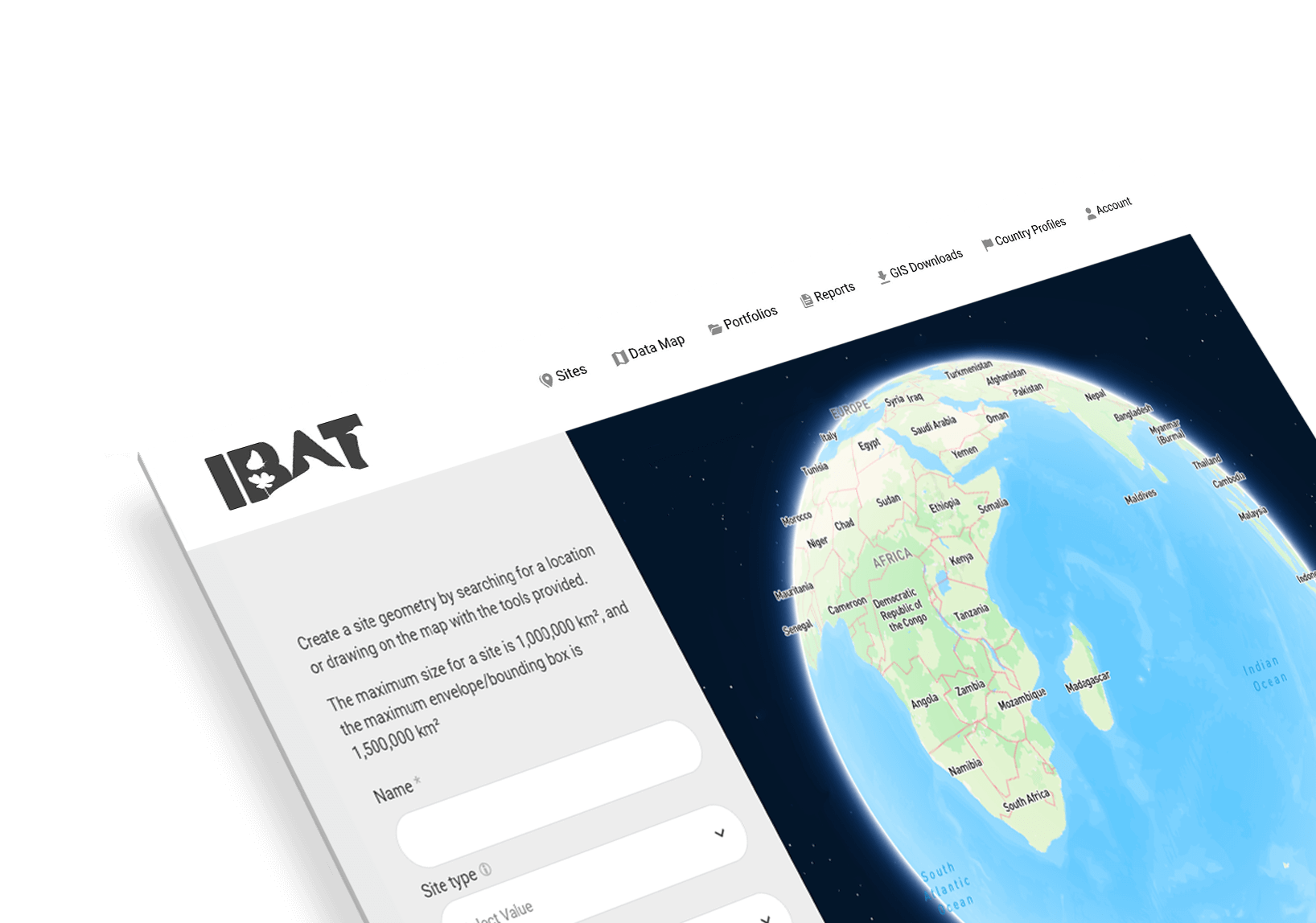
This is where the Integrated Biodiversity Assessment Tool (IBAT) plays a critical role. IBAT provides commercial access to some of the world's most trusted biodiversity datasets, including the IUCN Red List of Threatened Species ™, the World Database on Protected and Conserved Areas (WDPCA) and the World Database of Key Biodiversity Areas (WDKBA), and draws on the Species Threat Abatement Restoration (STAR) metric, among others. These datasets help organisations identify biodiversity risks, prioritise action and support reporting and disclosure requirements. IBAT is built on data informed by thousands of scientists and conservation experts worldwide and is trusted by organisations across sectors for biodiversity risk screening and nature-related decision-making.
3. Focus on material risks first
Organisations often feel overwhelmed by the scale of biodiversity challenges. The most effective approach is to focus first on the areas where biodiversity risks are greatest and most material to business performance.
Mapping potential impacts against sensitive species, protected areas and key biodiversity sites allows businesses to prioritise resources and focus on the places where intervention can have the greatest value for both nature and their organisation.
4. Follow a clear roadmap for action
Understanding risk is only the first step. Businesses also need a practical pathway for determining what actions should come next.
The IUCN RHINO approach, which stands for (Rapid High-Integrity Nature-positive Outcomes), provides organisations with a science-based roadmap to help them determine where to act, what interventions to prioritise and how to measure progress towards Nature Positive outcomes. Importantly, it helps businesses embark on "no-regrets" actions that are robust, scientifically supported and aligned with evolving compliance and reporting expectations. [iucnrhino.org]
For more than two years, IUCN has been working with leading companies in various sectors - from forestry, mining, construction and chemicals - to pilot this approach, which has helped inform their strategies and interventions. These case studies form an important and growing resource of practical insights from companies applying IUCN RHINO in an operational context, demonstrating not only the effectiveness of the approach, but also providing valuable feedback on how we can further refine and improve the methodology.
5. Think beyond reporting
Reporting requirements continue to evolve, but biodiversity action should not be viewed as a compliance exercise alone.
Organisations that proactively understand their relationship with nature are better positioned to manage operational, transition and systemic risks while strengthening resilience and long-term value creation. Nature Positive action can also support licence to operate, enhance stakeholder trust and demonstrate leadership in an increasingly nature-conscious economy.
From assessment to action
This CBD COP year presents an important opportunity for businesses to move beyond ambition and accelerate implementation. By combining authoritative biodiversity data with practical frameworks for action, organisations can better understand their impacts and dependencies, prioritise interventions and contribute meaningfully to global efforts to halt and reverse nature loss.
Learn more
IUCN manages the Red List of Threatened Species and is a founding member of the IBAT Alliance, along with other leading conservation organisations, BirdLife International, Conservation International and UNEP-WCMC.
Book a free IBAT demo and learn more about how IBAT can support your organisation.