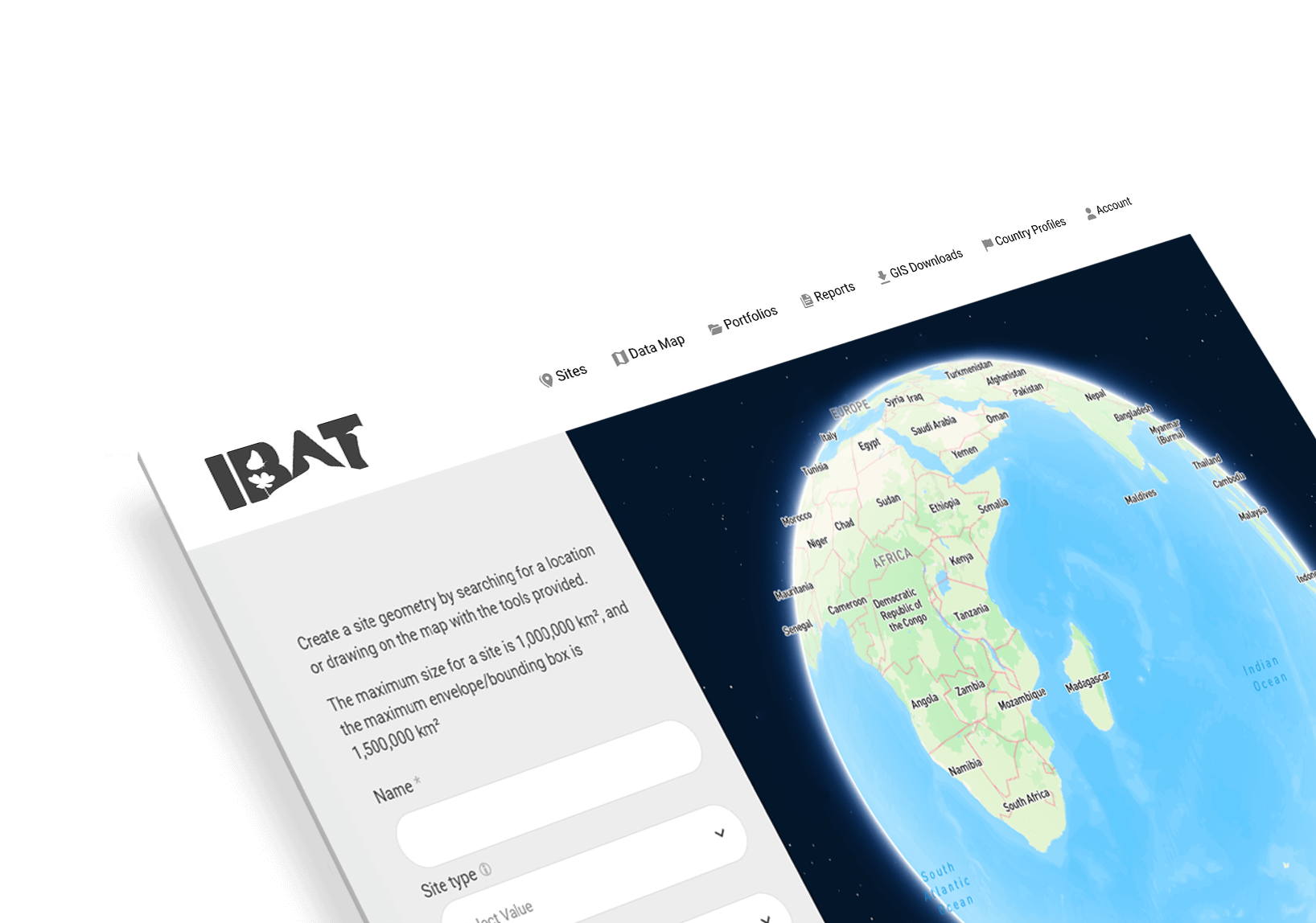
This year’s theme, ‘Countdown to 2030: Aligning Ambition, Scaling Integrated Action’, reflected the urgency of meeting the Kunming-Montreal Global Biodiversity Framework’s 23 targets by 2030. The Dialogues facilitate genuine collaboration through expert, business, and finance-led interactive workshops, with sessions spanning everything from nature-related financial risk to place-based conservation.
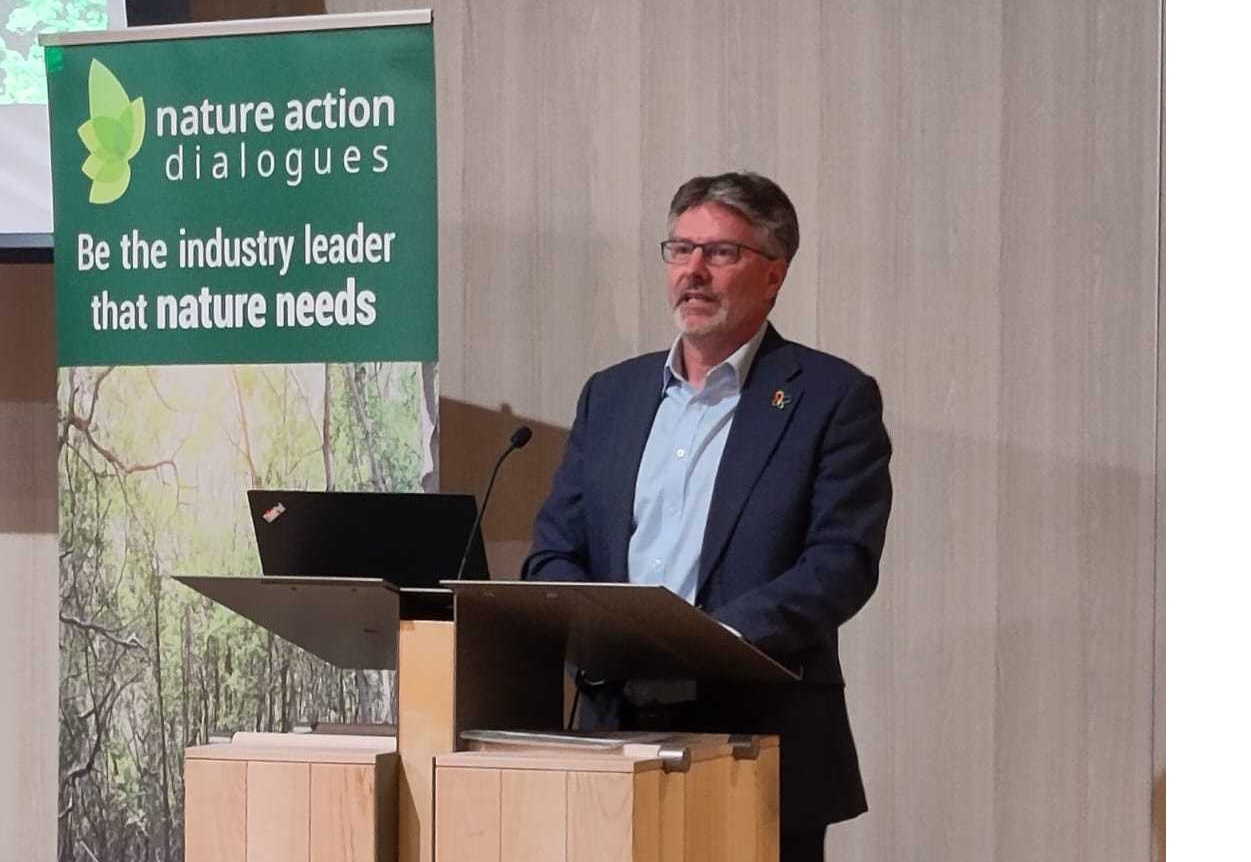
A key theme running throughout this year’s event was that action is most effective when driven by evidence and reliable data, as highlighted by the IPBES Business and Biodiversity Assessment which launched earlier in 2026.
IBAT led three sessions at this year’s event, each focused on making biodiversity data more accessible and actionable for organisations navigating complex nature-related decisions.

The three IBAT sessions focused on three areas: Place-based nature action, evidence-driven decisions, and aligning financial flows. Read more below.
Navigating complexities around implementing the avoidance part of the mitigation hierarchy
Avoidance is the first and most critical step of the mitigation hierarchy, yet it remains one of the least understood and hardest to implement in practice. This session went beyond simplified location-based approaches, exploring what effective avoidance actually means across sectors. Through expert input and scenario-based discussions, participants examined no-go area definitions, sector-specific constraints, and how companies can demonstrate robust avoidance to build credibility in biodiversity risk management.
From insights to action with IUCN RHINO — new IBAT tool to assess species extinction risk
The IUCN RHINO approach (Rapid High Integrity Nature-positive Outcomes) helps organisations understand their interface with nature and act on it. Early adopters had long relied on manually compiled files to calculate Species Threat Abatement and Restoration (STAR) scores. This session heard from pioneers of the approach, including Fortescue and Suzano, before introducing the new IBAT tool that makes the STAR assessment integrated and accessible to all users. Attendees learned how to use IBAT species reports to produce a robust analysis that directly informs decision-making.
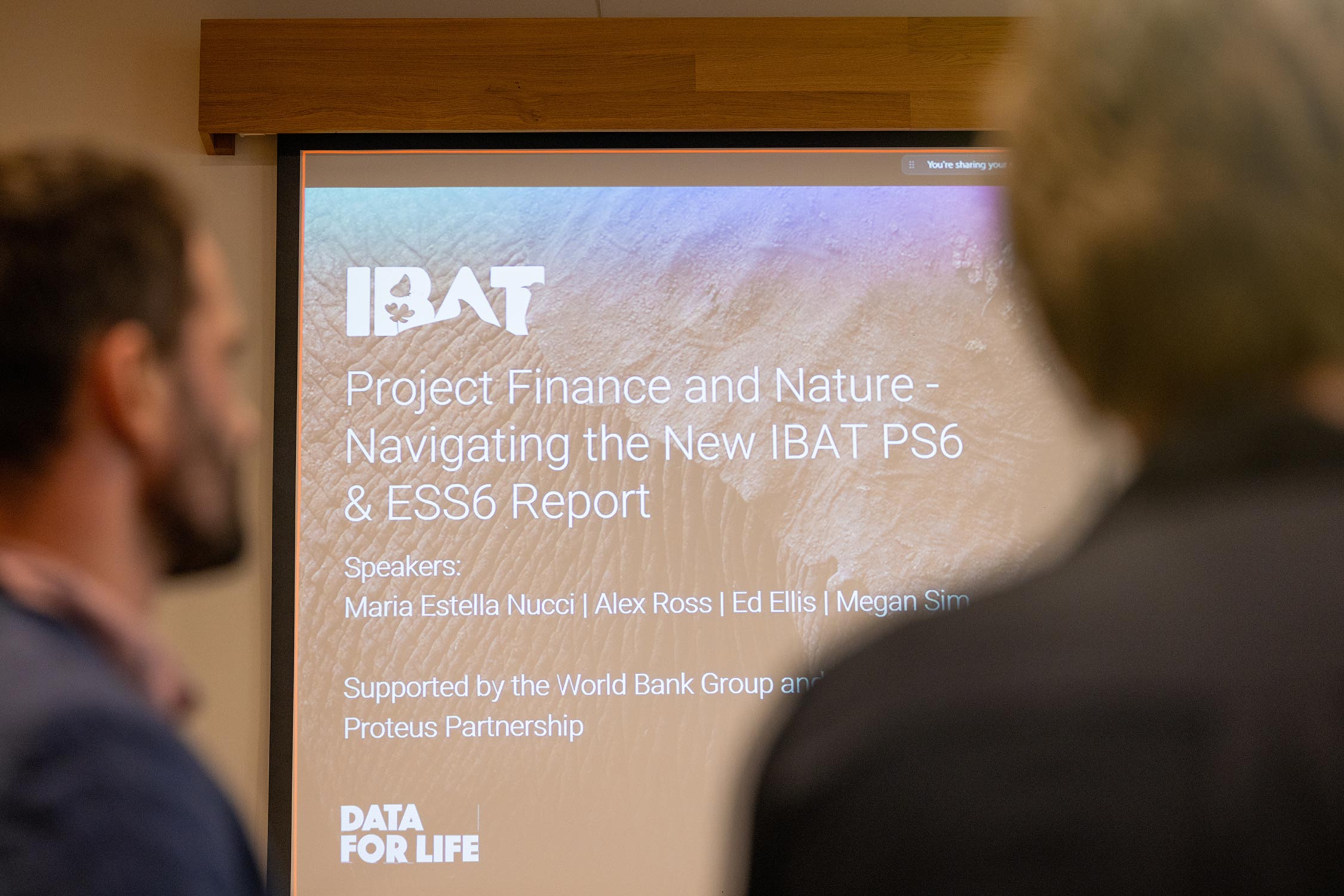
Project finance and nature: navigating the new IBAT PS6 report
As financial institutions align with the Equator Principles and disclosure requirements under TNFD and CSRD, precise biodiversity risk identification is essential for project bankability. IFC Performance Standard 6 (PS6) remains the benchmark for implementing nature goals at the project level. This session introduced the latest updates to the IBAT IFC PS6 Report, demonstrating how authoritative global data can assist in identifying Critical Habitats and helping companies and lenders navigate complex PS6 expectations with greater confidence.
Why it matters
Across all three sessions, a common thread emerged: the gap between knowing where nature risks exist and being able to act on that knowledge with confidence. Whether it’s a project developer asking “have I done enough to avoid harm?”, a company seeking to understand its contribution to species extinction, or a lender assessing biodiversity risk before financing a project — the need for clear, standardised, and accessible tools has never been greater.
The broader Dialogues reinforced this urgency. A key insight shared across sessions was that nature-related risks are already impacting business activities — supply chain disruptions, reduced crop yields driven by habitat loss, and climate regulation failures are no longer hypothetical. And yet, as UNEP-WCMC noted, investments that degrade nature still outnumber those protecting it at a ratio of 30:1. Redirecting financial flows is essential to meeting the KMGBF’s 2030 targets.
These sessions reflected IBAT’s ongoing commitment to bridging science and action, and to supporting the kind of evidence-driven, collaborative action that events like the Nature Action Dialogues are designed to accelerate.
To learn more about IBAT's biodiversity risk assessment and insights tools or to book a demo, contact us at ibat@ibat-alliance.org