Matt Jones, co-chair of the IPBES Business and Biodiversity Assessment and Chief Impact Officer at IBAT Alliance partner UNEP-WCMC, explains how businesses should act on a ground-breaking assessment.
For businesses, healthy biodiversity and functioning ecosystems services are foundational to resilience, risk management and business continuity, yet that hasn’t always been well understood. Now, that situation is changing. We’re seeing more corporations engage with biodiversity as a concept and initiatives designed to help address the problems caused by biodiversity loss.
I recently had the privilege of working on the first globally authoritative assessment of the methods to assess the impact and dependence of businesses on biodiversity. As one of three co-chairs of the Intergovernmental Science-Policy Platform on Biodiversity and Ecosystem Services (IPBES) Business and Biodiversity Assessment, I collaborated with 80 experts from 35 countries, including communities and individuals holding Indigenous and local knowledge.
The publication of the assessment was a landmark moment. Its central findings were agreed by over 150 governments that met in Manchester in February of this year and went line by line, word by word, page by page, through the assessment’s Summary for Policymakers.
Every single business, everywhere on the planet, impacts and depends on biodiversity. Consider the ecosystem services we rely upon such as clean air and water, healthy soil – all of these are underpinned by healthy habitats, thriving species and protected areas. As a result of the relationships that businesses have, every business has the potential to be an agent of positive change.
Where to start: making informed decisions for nature
The findings of the Business and Biodiversity Assessment are clear: businesses need to assess their impacts and dependencies consistently and appropriately, and assess which method works best on the basis of three things.
First, is coverage: does the method address the aspects being measured? Does it have the right geographic and temporal coverage to answer the specific question?
Second is accuracy: Sometimes all that’s needed is an answer that is what might be termed directionally correct: a method that can adequately show that of two options, one is better than the other. For example, if there is a choice between two suppliers or where to site a new operation, this does not require a perfect answer, so long as the difference between those two options is clear.
Third: is the method responsive? Will it help understand change on the ground when necessary? Will it show changes in the state of nature? This can be vital information if a business is making an intervention intended to restore an ecosystem, or manage their use of natural resources within sustainable limits.
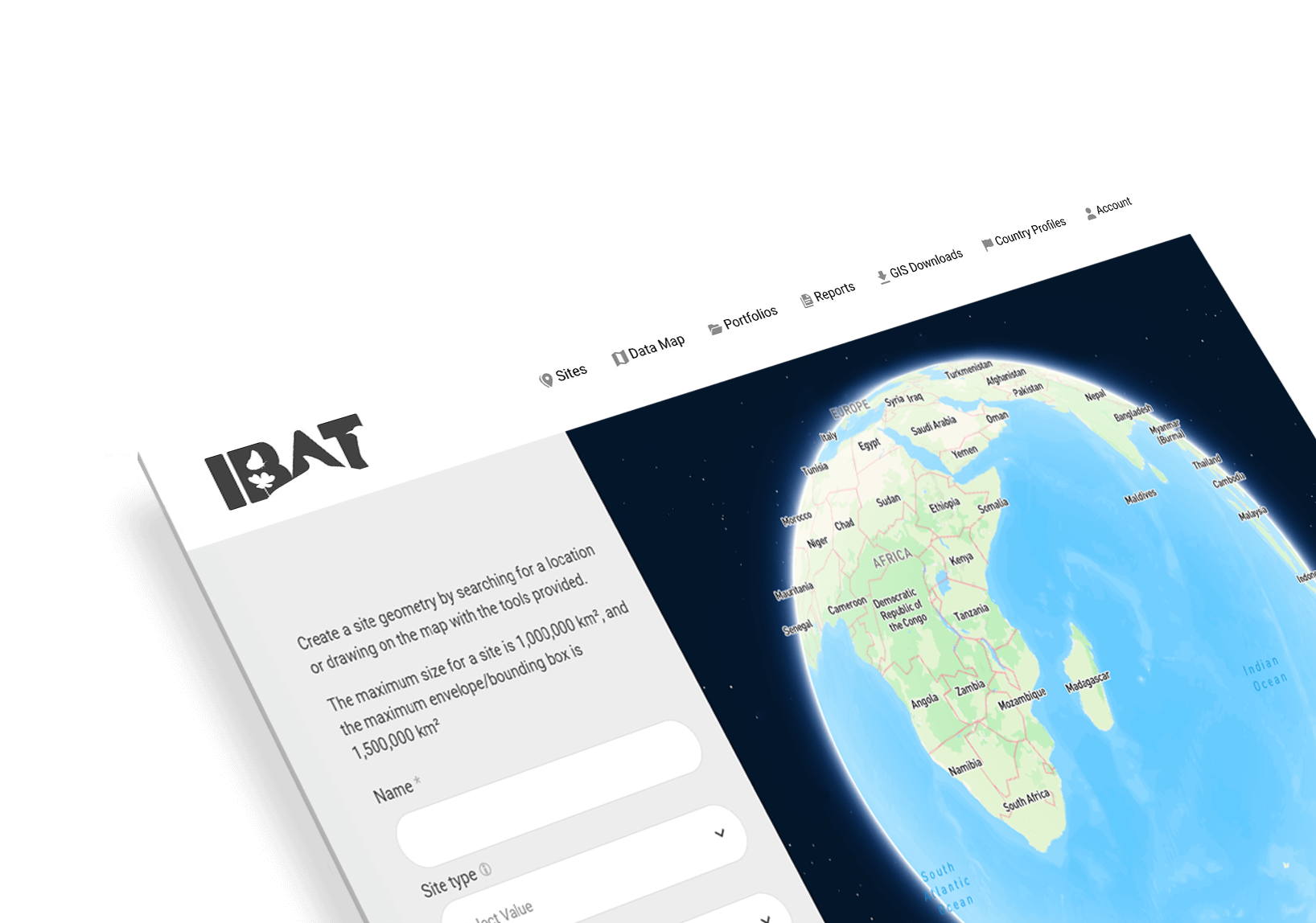
For businesses looking for a starting point, tools like IBAT respond to the needs and requirements recognised in the IPBES framework for choosing methods. IBAT directly contributes to decision-making by making authoritative biodiversity data usable and comparable on a global scale.
Understanding knowledge gaps
A huge amount of data, information and knowledge is already available, but it can be difficult to know where to begin. Better decisions can be made by engaging with existing science, evidence and Indigenous and local knowledge, and learning from different ways of thinking about our relationship with nature. That might entail learning from the models adopted by businesses that have strong connections to the culture and worldviews of Indigenous Peoples and local communities.
The assessment shows that there are many tools, including IBAT that can help enable this broader transformation. While no single tool meets every need, IBAT is valuable when used appropriately alongside other approaches. For example, by helping stakeholders understand and engage with the concept of biodiversity risk early on in decision-making, supports comparison and prioritisation, and helps normalise biodiversity considerations in everyday business decisions.
Reducing risk by protecting the future
We can create an enabling environment where activities and decisions that are harmful to biodiversity come to an end. In this environment, businesses transition towards activities, actions and decisions that are compatible with a just and sustainable future. Crucially, this benefits not only the businesses themselves, as what is profitable for a business is good for society and nature.
One of the most empowering threads that runs through the IPBES Business and Biodiversity Assessment is that if businesses have the potential to be agents of positive change, then it follows that those working in business, or with businesses can be too. The findings are clear: the current pace of change isn’t working, but it is within our power to alter it.
Matt will be speaking about the IPBES assessment at Reset Connect on Wednesday 24th June alongside UNEP-WCMC, IBAT and others at London Climate Action Week. Visit Reset Connect for more information.